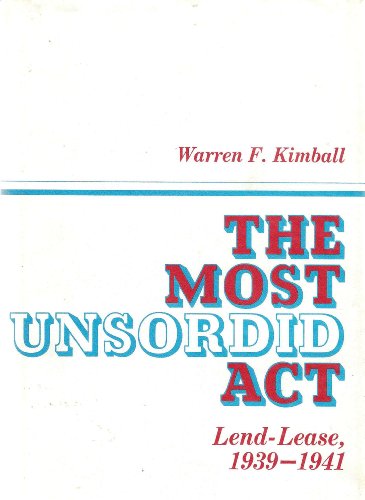
The Most Unsordid Act: Lend-Lease 1939-1941
Couldn't load pickup availability
About this book
Originally published in 1969. In The Most Unsordid Act Warren Kimball provides a history of the Lend-Lease idea. The genesis and development of the Lend-Lease idea although spanning less than two years offers a subject of the broadest significance for major questions of democratic government and society. The story begins with the United States growing recognition of the British monetary and gold shortage and ends with the passage of the Lend-Lease Act and the American commitment that it involved. Dr. Kimballs narrativechronological detailed and dramaticincludes analyses of the domestic and international concerns on both sides of the Atlantic and of the roles of the leading protagonists: President F. D. Roosevelt and Treasury Secretary Morgenthau as well as Stimson Hull Churchill and key British representatives. He also examines the possibility that Lend-Lease was designed to benefit the American economy at Britains expense. A central question animates Kimballs account: How could a president who recognized the ultimate threat of Nazi Germany but shared his nations desire to avoid war find a way to help an ally? The portrait of Roosevelt that emerges is instructive in view of revisionist histories that present him as a Machiavellian figure disingenuously leading his country to war. Kimball sees him rather as an essentially domestic president whose experiences and interests evolved from national concernsas a man unschooled in international affairs eager to avoid confrontation with his congressional opposition wary of the British penchant for power politics given to procrastination when faced with difficult problems and anxious to avoid full-scale war. Yet the administrations legislative strategy and the debate over the Lend-Lease Act clearly demonstrated that the president his closest advisers and the Congress were aware that the legislation would inevitably mean war with Germany. Based on such sources as the diaries of Morgenthau the State Department Archives Foreign Economic Administration records the Stimson papers and interviews with participants this study provides insights that raise central questions about the functioning of the American system of government.