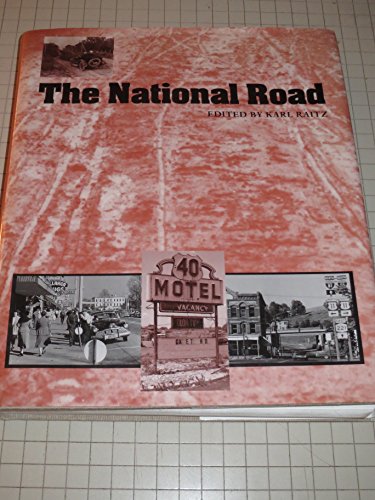
The National Road (The Road and American Culture)
Couldn't load pickup availability
About this book
In 1808 according to a report to Congress issued by Jeffersons treasury secretary Albert Gallatin the most efficient way to ship goods from Pittsburgh to Philadelphia was by water: down the Monongahela River to the Ohio then down the Mississippi to New Orleans around the tip of Florida and up the Atlantic Coast. By this route the two Pennsylvania towns were more than 3 000 miles apart; by land the distance was 280. Clearly Gallatin argued the United States needed a roada National Road. This comprehensive authoritative and richly illustrated volume offers a sweeping overview of the project that shaped the geography and history of the United States by uniting East and Westand ultimately dividing North and South. With its companion volume A Guide to the National Road it describes the origins evolution and meaning of the National Road for American culture economics and patterns of settlement. As the first federally funded and planned national highway in America the National Road was intended to forge critical transportation links between established East Coast cities and an emerging frontier west of the Appalachians in the old Northwest Territory. Begun in 1808 in Cumberland Maryland the Roads first segment reached Wheeling West Virginia in 1818. By 1850 the Road had been extended to its formal western terminus in Vandalia the Illinois state capital. From there two routes went west toward the Mississippi River one to East St. Louis and the other to Alton Illinois. (Today the Roads path is followed for the most part by U.S. 40 and I-70.) Paradoxically the authors explain the National Road was both obsolete and premature from the time it was builtobsolete because the emerging technology of the railroad would soon offer a far more efficient means of overland transportation; and premature because the technology that could make efficient use of an improved road networkthe automobilewas nearly a century away. In the end the Road never quite reached the banks of the Mississippi and never in the period between 1808 and 1850 did a good road complete and in good repair exist between Cumberland and Vandalia. But in the antebellum period the Road represented the central governments power to open the West and the power of nineteenth-century Americans to define themselves as a continental people. Travelers who follow their path todayalong the National Road or other U.S. highwaysowe much to their pioneering efforts.