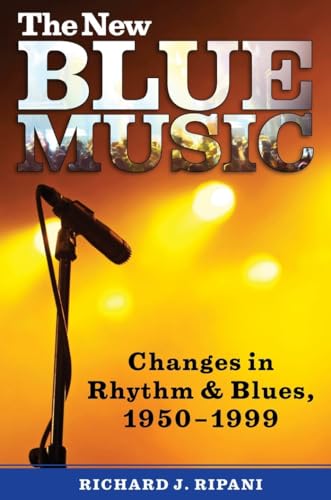
The New Blue Music: Changes in Rhythm & Blues, 1950–1999 (American Made Music Series)
Couldn't load pickup availability
About this book
The New Blue Music: Changes in Rhythm & Blues, 1950–1999 (American Made Music Series) by Ripani, Richard J.. paperback edition. ISBN: 9781578068623.
Rhythm & blues emerged from the African American community in the late 1940s to become the driving force in American popular music over the next half-century. Although sometimes called “doo-wop,” “soul,” “funk,” “urban contemporary,” or “hip-hop,” R&B is actually an umbrella category that includes all of these styles and genres. It is in fact a modern-day incarnation of a musical tradition that stretches back to nineteenth-century America, and even further to African beginnings. The New Blue Music: Changes in Rhythm & Blues, 1950-1999 traces the development of R&B from 1950 to 1999 by closely analyzing the top twenty-five songs of each decade. The music of artists as wide-ranging as Louis Jordan; John Lee Hooker; Ray Charles; James Brown; Earth, Wind & Fire; Michael Jackson; Public Enemy; Mariah Carey; and Usher takes center stage as the author illustrates how R&B has not only retained its traditional core style, but has also experienced a “re-Africanization” over time. By investigating musical elements of form, style, and content in R&B―and offering numerous musical examples―the book shows the connection between R&B and other forms of American popular and religious music, such as spirituals, ragtime, blues, jazz, country, gospel, and rock n roll. With this evidence in hand, the author hypothesizes the existence of an even larger musical “super-genre” which he labels “The New Blue Music.”