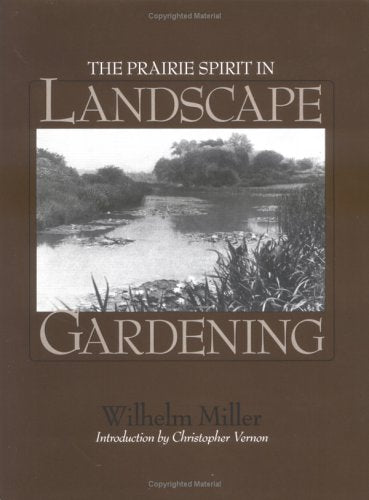
The Prairie Spirit of Landscape Gardening (1915) (American Society of Landscape Architects Centennial Reprint)
Couldn't load pickup availability
About this book
The Prairie Spirit of Landscape Gardening (1915) (American Society of Landscape Architects Centennial Reprint) by Miller, Wilhelm. Hardcover edition. ISBN: 9781558493292.
In 1915, Wilhelm Miller (1869–1938), an influential author and editor, published The Prairie Spirit in Landscape Gardening, a profusely illustrated book that championed the "prairie style" of landscape gardening. It was the first book to address the question of a truly American style of landscape design and remains one of the most significant early treatises on that topic. This handsome volume features several projects by Jens Jensen, a Danish immigrant whose ecologically based, conservation-oriented approach to park and residential design had a strong impact in Chicago and formed the foundation of the stylistic school Miller was promoting. The book also features photographs of O. C. Simondss designs for Chicagos Graceland Cemetery and midwestern landscapes by Walter Burley Griffin, Frank Lloyd Wright, Warren H. Manning, among others. Before and after images vividly demonstrate Millers taste for abundant use of hardy native plants in landscape design. His emphatic captions―"Away with Gaudy Foreigners and Artificial Varieties!" "Restore the Native Vegetation!"―leave little doubt about his aesthetic position. Christopher Vernons new introduction links the prairie style to Wright and other architects of the Progressive Era, arguing that Wrights use of prairie landscape elements actually preceded that by Jensen, Simonds, and their peers. Vernon shows how prairie imagery provided design ideas for some and also provided a label―prairie style―that helped promote naturalistic work generally. Architects, landscape architects, and garden enthusiasts will be intrigued by Vernons insights and inspired by Millers impassioned call to celebrate, replicate, and conserve the Midwestern landscape. Published in association with Library of American Landscape History: http://lalh.org/