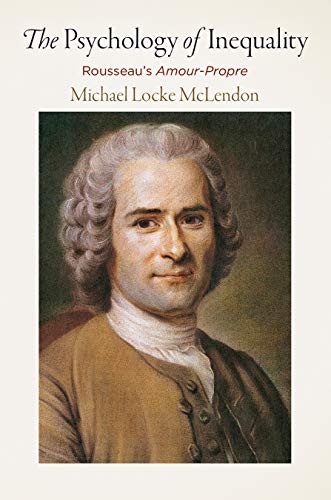

The Psychology of Inequality: Rousseau's "Amour-Propre" (Haney Foundation Series)
Couldn't load pickup availability
About this book
In The Psychology of Inequality Michael Locke McLendon looks to Jean-Jacques Rousseaus thought for insight into the personal and social pathologies that plague commercial and democratic societies. He emphasizes the way Rousseau appropriated and modified the notion of self-love or amour-propre found in Augustine and various early modern thinkers. McLendon traces the concept in Rousseaus work and reveals it to be a form of selfish vanity that mimics aspects of Homeric honor culture and in the modern world shapes the outlook of the wealthy and powerful as well as the underlying assumptions of meritocratic ideals. According to McLendon Rousseaus elucidation of amour-propre describes a desire for glory and preeminence that can be dangerously antisocial as those who believe themselves superior derive pleasure from dominating and even harming those they consider beneath them. Drawing on Rousseaus insights McLendon asserts that certain forms of inequality especially those associated with classical aristocracy and modern-day meritocracy can corrupt the mindsets and personalities of people in socially disruptive ways. The Psychology of Inequality shows how amour-propre can be transformed into the demand for praise whether or not one displays praiseworthy qualities and demonstrates the ways in which this pathology continues to play a leading role in the psychology and politics of modern liberal democracies.