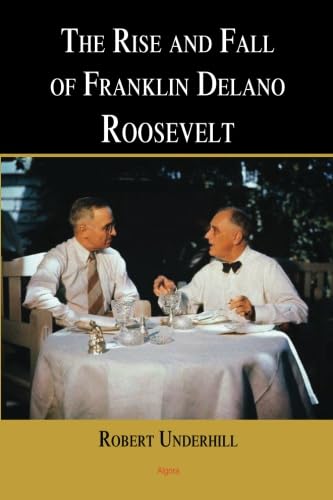
The Rise and Fall of Franklin Delano Roosevelt
Couldn't load pickup availability
About this book
FDR was at the helm when the United States escaped from its greatest economic depression and thus he earned an important place in history. But he made serious mistakes too especially during his third and fourth terms. Changes in FDRs acumen were brought on by the burdens of office ill health and age not to mention an innate self-confidence that developed into arrogance. His supporters for the most part are adamantly uncritical and refuse to accept this. Historian Robert Underhill examines the personal and administrative qualities of FDR and from that perspective as he analyzes the U.S. response to the changing global scene between the two world wars. Lucky for America the accumulated errors and lapses made by the U.S. Administration between 1939 and 1945 did not equal either of the major mis-steps committed by wartime enemies: 1) Hitlers decision to invade the Soviet Union and 2) Japans decision to attack Pearl Harbor. World War I had reduced most of Western Europe to rubble and in the aftermath of that debacle extreme poverty due in large part to the harshness of peace treaties swept over the defeated nations. The hardships of those times made it inevitable that some governments would attempt recovery through authoritarian and military means. In the United States conditions first flourished and then after the stock market crashed in 1929 sank into a Great Depression. Stresses were very grave but rather than resorting to arms American citizens yielded to reforms instituted through measures of the New Deal the hallmark of Roosevelts presidency. Meanwhile totalitarian leaders in Germany and Italy encouraged huge rearmaments programs and began encroaching upon neighboring governments. Austria Czechoslovakia Hungary Romania and smaller nations were taken over by Nazis thereby adding to a Reich which der Fuhrer (the leader) and his cohorts claimed would last a thousand years. Driven by that zeal the German Wehrmacht (armed forces) in 1939 invaded Poland and another World War was begun. Roosevelt and his interactions with Churchill who was urgently seeking U.S. assistance while the American population wanted no part in another war make up a central theme of the current work. The Rise and Fall of Franklin D. Roosevelt will appeal to readers who want to know more about the Great Depression the New Deal and events leading to World War II. There are hundreds of histories of the Franklin Roosevelt period but few admit he sometimes showed poor judgment. Despite his obvious achievements important errors can be traced to FDR that would have driven a lesser idol from office as this book demonstrates. The book is written in a narrative style that is engaging and easy to grasp for students as well as adults yet the work has sufficient documentation to satisfy discriminating historians.