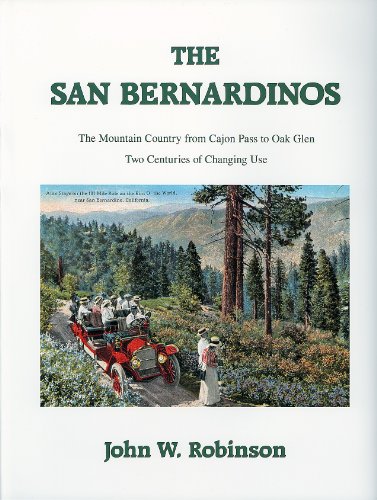
The San Bernardinos: The Mountain Country from Cajon Pass to Oak Glen Two Centuries of Changing Use
Couldn't load pickup availability
About this book
The imposing San Bernardino Mountains overlook the San Bernardino Valley on the south the Mojave Desert on the north and the Joshua Tree country to the east. These mountains because of their proximity to the population centers of Southern California have a rich heritage. Few mountain ranges anywhere have been as swarmed over dug into deforested and built upon as have the San Bernardinos. Primitive peoples once sought food clothing and shelter in the San Bernardinos. The ancient Mojave Trail crossed its western heights and was a major trade route between coastal and desert Indians. Nearby Cajon Pass was traversed by explorers horse thieves traders and finally by railroads and highways -- one of the major routes into Southern California. Mormon lumbermen were first to tap the crest forests and for a half century timber cutting was a major economic activity in the San Bernardinos. The great Holcomb Valley gold rush of 1860 initiated a century of mining. Great herds of cattle and sheep fattened on the rich grasses of the mountain meadows. Water became a sought-after commodity with the building of Bear Valley Dam in 1884 and Little Bear (Lake Arrowhead) Dam two decades later. It was the threat of destruction of the mountain watershed that led directly to the setting aside by President Benjamin Harrison of the San Bernardino Forest Reserve in 1893. The turn of the century years witnessed a perceptible change in mankinds use of the San Bernardinos. More and more people went into the mountains to find homes and recreation rather than to simply exploit resources. Little Bear Lake formed originally to provide water to irrigate the San Bernardino Valley became the beautiful mountain community of Lake Arrowhead. Big Bear Lake continued to supply water for Redlands but became more important as a metropolitan area a playground and in recent years a winter sports center. Crestline Lake Gregory Blue Jay Cedar Glen Running Springs Green Valley Lake Forest Falls and a host of other subdivisions became viable mountain communities. In recent years this urbanizing of the mountains has brought with it many of the same problems facing the lowland population centers-- traffic congestion pollution sewage disposal difficulties water shortages. The years ahead will be trying ones. The future of the mountain communities and of the mountains themselves is in the hands of the people who live work and play here. This book details more than two hundred years of mankinds use of the San Bernardinos. It includes scores of rare and never before published photographs of mountain activities. It is a valuable record of the past as well as a challenge to the future.