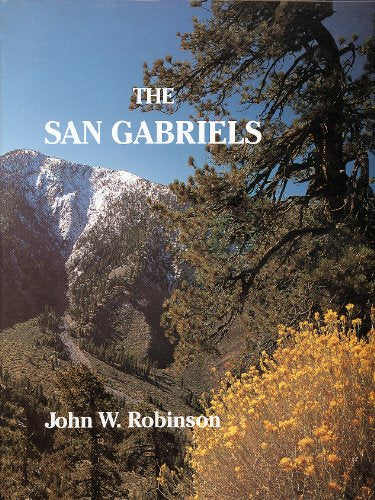
The San Gabriels
Couldn't load pickup availability
About this book
The San Gabriel Mountains overlook the Los Angeles Basin San Gabriel and Pomona Valleys on the south and the Mojave Desert on the north. These mountains because of their proximity to the population centers of Southern California have a rich heritage. Primitive peoples once sought food clothing and materials from the San Gabriels. Spanish missionaries and the Californio successors cut timber and utilized the water that flowed from the mountains. Horsethieves preying on the huge rancho herds used the hidden recesses for refuge. Herders pastured cattle and sheep on the back country flats. Gold was the lure that brought miners into the mountains. Californias first gold rush occurred in Placerita Canyon at the western edge of the San Gabriels. Hardy prospectors swarmed into San Gabriel Canyon to pan sluice long-tom and hydraulic in a frantic quest for mineral wealth. The short-lived mining camp of Eldoradoville sprang up overnight at the elbow of the East Fork and just as quickly disappeared in the great flood of 1862. But flood fire and grizzlies failed to deter the stubborn miners and for half a century they continued to extract gold and silver from the mountains. On the heels of the gold miners came the water seekers. The lowland communities and citrus orchards that boomed to life in the 1880s needed water for domestic use and irrigation and they hungrily captured the flows that emitted from the canyons. In times of drought they fought tooth and nail over the liquid gold each faction determined to safeguard its fair share. Mountain water was also used to generate hydroelectric power. And water too much of it could be an awful scourge necessitating the construction of flood control dams in all the major canyons. The pleasure seeker came into the San Gabriels in the 1880s to fish the trout-rich streams hunt wild game and relax in a wilderness setting. Mountain resorts sprang up to cater to the lowland visitor. Switzer Camp in the Arroyo Seco was the first quickly followed by such sylvan hostelries as Martins and Strains camps on Mt. Wilson Sturtevants Camp in Big Santa Anita Canyon Camp Baldy in San Antonio Canyon Glenn Ranch in Lytle Creek and many others. The ultimate in mountain pleasures was the Mount Lowe Railway which climbed from Altadena to Echo Mountain and on up to famous Ye Alpine Tavern. The Mount Lowe Railway and even more the Mount Wilson Observatory one of the early 20th centurys great scientific ventures brought world-wide fame to the San Gabriels. The Angeles Crest Highway and other paved thoroughfares beginning in the 1930s made the mountains easily accessible to swarms of city dwellers. The San Gabriels have become a backyard playground for thousands who live nearby. This proximity to urban centers has in recent years brought urban problems to the mountains traffic congestion pollution vandalism and crime. How we solve these problems will determine how the San Gabriels will serve our recreational and watershed needs in the future. This book details more than two hundred years of mankinds use of the San Gabriels. It includes scores of rare photographs. It is a valuable record of the past as well as a challenge to the future.