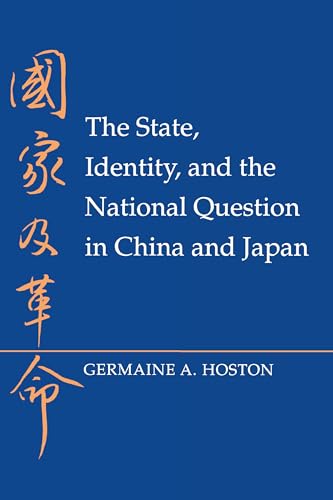
The State, Identity, and the National Question in China and Japan
Couldn't load pickup availability
About this book
The State, Identity, and the National Question in China and Japan by Hoston, Germaine A.. paperback edition. ISBN: 9780691023342.
The first decades of the twentieth century witnessed an explosion of nationalist sentiment in East Asia, as in Europe. This comprehensive work explores how radical Chinese and Japanese thinkers committed to social change in this turbulent era addressed issues concerning national identity, social revolution, and the role of the national state in achieving socio-economic development. Focusing on the adaptation of anarchism and then Marxism-Leninism to non-European contexts, Germaine Hoston shows how Chinese and Japanese theorists attempted to reconcile a relatively new appreciation for the nation-state with their allegiance to a vision of internationalist socialist revolution culminating in stateless socialism. Given the influence of Western experience on Marxism, Chinese and Japanese theorists found the Marxian national question to be not merely one of whether the "working man has no country," but rather the much more fundamental issue of the relative value of Eastern and Western cultures. Marxism, argues Hoston, thus placed native Marxists in tension with their own heritage and national identity. The author traces efforts to resolve this tension throughout the first half of the twentieth century, and concludes by examining how the tension persists, as Chinese and Japanese dissidents seek identity-affirming modernity in accordance with the Western democratic model.