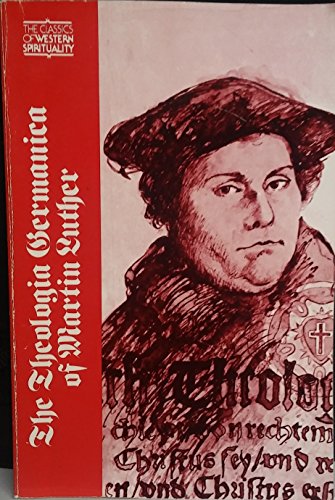
The Theologia Germanica of Martin Luther (Classics of Western Spirituality (Paperback))
Couldn't load pickup availability
About this book
The Theologia Germanica of Martin Luther (Classics of Western Spirituality (Paperback)) by Martin Luther. paperback edition. ISBN: 9780809122912.
"It is a very impressive publishing venture. The time had come when, after many centuries of brutal antagonism, members of different religions could see that they had something to learn from and much to respect in each others faiths." Rabbi Jonathan Magonet Leo Baeck College Theologia Germanica of Martin Luther translation, introduction and commentary by Bengt Hoffman, preface by Bengt Hagglund "Let me also say this: no great works and wonders God has ever wrought or shall ever do in or through his created world, not even God himself in his goodness, will make me blessed if they remain outside of me. For blessedness is only present to the extent to which it is within me, as a happening, as an inner knowledge, as love, as feeling and taste." The Theologia Germanica This is a simple yet very profound book about life in God as it translates into life in the world. It was written around 1350 by an anonymous author. This translation has been entitled The Theologia Germanica of Martin Luther since it is based on the Reformers edition of 1518. Luther wrote: "next to the Bible and St. Augustine, no other book has come to my attention from which I have learned-and desired to learn-more concerning God, Christ, man and what all things are." Bengt Hoffman in his Foreword says, "Luthers kinship with this book and with Johann Tauler, as well as with some other mystics of the late Middle Ages, suggests a union in the Body of Christ, transcending ecclesial boundaries, through sapientia experimentalis, the hearts knowledge of Christs presence here and now." †