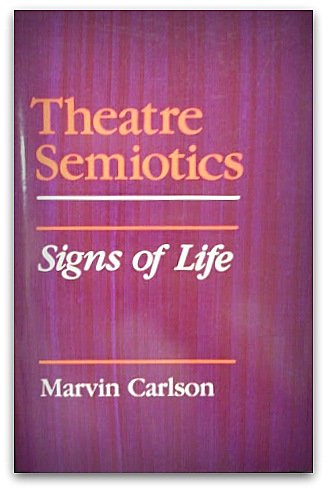
Theatre Semiotics: Signs of Life (Advances in Semiotics)
Couldn't load pickup availability
About this book
Theatre Semiotics: Signs of Life (Advances in Semiotics) by Carlson, Marvin. Hardcover edition. ISBN: 9780253313157.
Theatre semioticians have to date concerned themselves primarily with the semiotics of the literary dramatic text, the semiotics of the physical enactment of this text, or the relationship between the two. Theatre Semiotics offers a broader, differently oriented analysis, balancing consideration of the ways theatrical signs are produced with the ways they are received and creatively interpreted by a public. The theatre experience is here regarded not simply as the physical realization of a written text on a stage but as a complex social event whose semiotics involves not only play and performance but the entire experience of attending theatre. Each section of the study works from a different but related perspective. The first discusses how audiences develop interpretive strategies from sources both within and outside the production system of the event itself, and some of the implications of this process for producers of theatre and for audience participation. The second section deals with the semiotics of space and its relationship to interpretation of the theatre event. The concern here is not with the performance on stage but with other space involved in the performance event, such as theatre architecture and performance outside traditional theatre spaces. The final section deals more directly with the creative contribution of the audience. As its title suggests, Theatre Semiotics is primarily semiotic in orientation, but it draws upon related work in reception theory, hermeneutics, and phenomenology in order to provide clearer understanding of the dynamics of the total theatre event.