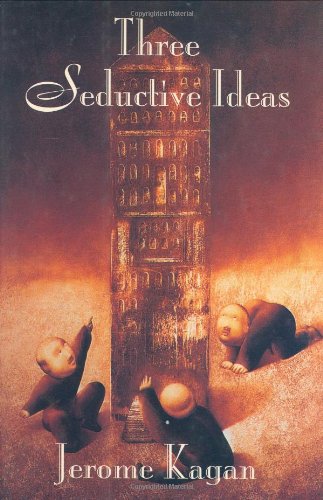
Three Seductive Ideas
Couldn't load pickup availability
About this book
Three Seductive Ideas by Kagan, Jerome. hardcover edition. ISBN: 9780674890336.
Do the first two years of life really determine a childs future development? Are human beings, like other primates, only motivated by pleasure? And do people actually have stable traits, like intelligence, fear, anxiety, and temperament? This book, the product of a lifetime of research by one of the founders of developmental psychology, takes on the powerful assumptions behind these questions--and proves them mistaken. Ranging with impressive ease from cultural history to philosophy to psychological research literature, Jerome Kagan weaves an argument that will rock the social sciences and the foundations of public policy. Scientists, as well as lay people, tend to think of abstract processes--like intelligence or fear--as measurable entities, of which someone might have more or less. This approach, in Kagans analysis, shows a blindness to the power of context and to the great variability within any individual subject to different emotions and circumstances. "Infant determinism" is another widespread and dearly held conviction that Kagan contests. This theory--with its claim that early relationships determine lifelong patterns--underestimates human resiliency and adaptiveness, both emotional and cognitive (and, of course, fails to account for the happy products of miserable childhoods and vice versa). The last of Kagans targets is the vastly overrated pleasure principle, which, he argues, can hardly make sense of unselfish behavior impelled by the desire for virtue and self-respect--the wish to do the right thing. Written in a lively style that uses fables and fairy tales, history and science to make philosophical points, this book challenges some of our most cherished notions about human nature.