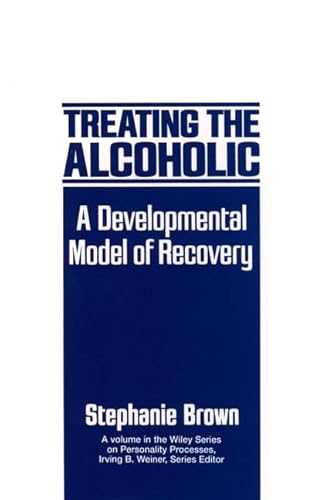
Treating the Alcoholic: A Developmental Model of Recovery (Wiley Series on Personality Processes)
Couldn't load pickup availability
About this book
Treating the Alcoholic: A Developmental Model of Recovery (Wiley Series on Personality Processes) by Brown, Stephanie. hardcover edition. ISBN: 9780471817369.
The book that revolutionized the psychotherapists approach to treating alcoholism When it was first published in 1985, Treating the Alcoholic challenged traditional psychotherapeutic approaches to alcoholism treatment. Since then, thousands of mental health professionals, using Dr. Stephanie Browns treatment model, have found renewed faith in their ability to help alcoholic patients achieve lasting recovery. The book begins by studying the experiences of people who have stopped drinking and provides firsthand descriptions of the inevitable emotional, physical, and psychological problems that follow. Dr. Brown then offers a model for treatment that replaces the notion of abstinence as a static state with a dynamic, process-oriented "continuum of recovery" principle. She translates the twelve steps of Alcoholics Anonymous into psychological terms, taking particular care to explain the crucial notion of "loss of control." Perhaps the most surprising element of Dr. Browns model is her emphasis on the triadic therapeutic relationship in which therapist, patient, and AA counselor work in partnership to ensure ongoing recovery. Once considered a radical departure from the conventional wisdom, Treating the Alcoholic offers a now-proven approach that enables psychiatrists, psychologists, social workers, alcoholism counselors, and other mental health professionals to understand the dynamics of alcoholism and make profound contributions to the recovery process.