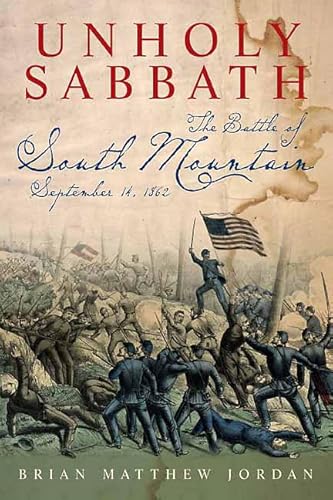

Unholy Sabbath: The Battle of South Mountain in History and Memory September 14 1862
Couldn't load pickup availability
About this book
Many readers of Civil War history have been led to believe the battle of South Mountain (September 14 1862) was but a trifling skirmish a preliminary engagement of little strategic or tactical consequence overshadowed by Antietams horrific carnage just three days later. In fact the fight was a decisive Federal victory and important turning point in the campaign as historian Brian Matthew Jordan argues convincingly in his fresh interpretation Unholy Sabbath: The Battle of South Mountain in History and Memory September 14 1862. Most writers brush past the mid-September battle in a few paragraphs or a single chapter. Jordan however presents a vigorous full-length study based upon extensive archival research newspaper accounts regimental histories official records postwar reunion materials public addresses letters and diaries. Readers will not only come away with a full understanding of the military actions at Foxs Turners and Cramptons gaps but a deeper and more meaningful appreciation for the ways in which Civil War veterans and the public at large remembered military eventsand why some were forgotten. The Union victory on the wooded and rocky slopes provided a substantial boost for the downtrodden men of the Union army who recognized the battle as hard fought and deservedly wona ferocious hours-long fight with instances of hand-to-hand combat and thousands of casualties. Jordan demonstrates conclusively that South Mountain was the first major victory for the Army of the Potomac and the first time its men held the field and were tasked with the responsibility of burying the dead. Unholy Sabbath proposes a new rubric for evaluating this important combat by examining not only the minute military aspects of the battle but how soldiers remembered the fighting and why South Mountain faded from public memory. Former Confederates true to the Lost Cause argues Jordan downplayed the victory emphasized how outnumbered they were and argued that their defense of the passes protected the concentration of General Lees army on the field of Sharpsburg. Union veterans however remembered South Mountain as a full-scale engagement wholly distinct from Antietam and one where they outfought and completely defeated their Rebel opponents and disrupted the entire Southern invasion. This richly detailed study complete with outstanding maps photographs a complete order of battle with losses and an in-depth interview with the author is modern Civil War history at its finest.