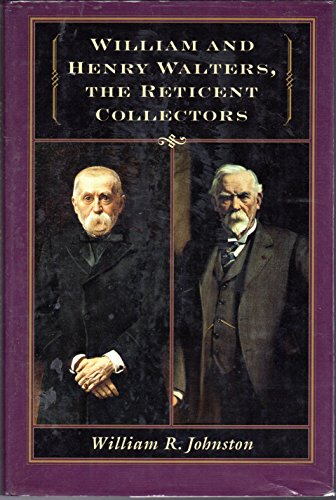
William and Henry Walters the Reticent Collectors
Couldn't load pickup availability
About this book
The story of the father and son who created the extraordinary collection that became Baltimores Walters Art Gallery. In the mid-nineteenth century Baltimore businessman William Thompson Walters began to patronize the artists of Maryland. Today the museum that bears his nameBaltimores Walters Art Galleryexcels in fields as diverse as Egyptian bronzes Byzantine silver illuminated manuscripts medieval carved ivories early Renaissance paintings Svres porcelains Islamic metalwork and Chinese ceramics. Surprisingly the story of how William Walters and his son Henry created one of the finest privately assembled museums in the United States has not been told. With this new book William Johnston the Walterss curator of eighteenth- and nineteenth-century art restores William and Henry Walters to their rightful place among Americas great art collectors. Drawing upon the knowledge of the early museum staff and gathering valuable information from the few other available sources Johnston has painstakingly recreated the life and world of the Walterses. Though Henry Walters moved easily in Baltimore and New York social circles Johnston explains he kept much to himself and generally purchased art away from the publics eye. Despite the Walterses reticence they had a significant influence on the development of American tastes and museumsWilliam in his role as the first chairman of the Committee on Works of Art for the Corcoran Gallery in Washington D.C. and Henry as the second vice-president of the Metropolitan Museum of Art in New York. Their personal collection differs from those of other more familiar collectors such as J. P. Morgan and Henry Clay Frick in that Henry Walters intended from the very first that the collection form a museum to serve the public. When the museum first opened its doors in 1934 Johnston relates many visitors were surprised by the collections size and by its comprehensive representation of the history of art from the third millennium b.c. to the early twentieth century. Richly illustrated with black-and-white photographs and sixteen pages of full color this book will fascinate anyone interested in Baltimore history the history of museums and art collecting in America and the art and culture of nineteenth-century America.