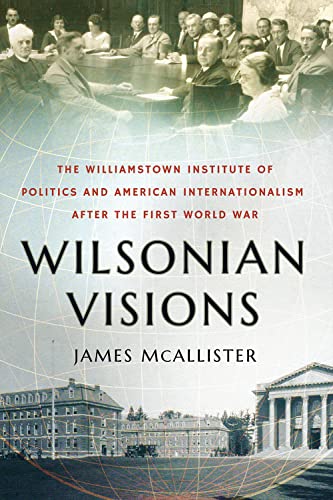
Wilsonian Visions: The Williamstown Institute of Politics and American Internationalism after the First World War
Couldn't load pickup availability
About this book
Wilsonian Visions: The Williamstown Institute of Politics and American Internationalism after the First World War by McAllister, James. hardcover edition. ISBN: 9781501759932.
In Wilsonian Visions, James McAllister recovers the history of the most influential forum of American liberal internationalism in the immediate aftermath of the First World War: The Williamstown Institute of Politics. Established in 1921 by Harry A. Garfield, the president of Williams College, the Institute was dedicated to promoting an informed perspective on world politics even as the United States, still gathering itself after World War I, retreated from the Wilsonian vision of active involvement in European political affairs. Located on the Williams campus in the Berkshire Mountains of Western Massachusetts, the Institutes annual summer session of lectures and roundtables attracted scholars, diplomats, and peace activists from around the world. Newspapers and press services reported the proceedings and controversies of the Institute to an American public divided over fundamental questions about US involvement in the world. In an era where the institutions of liberal internationalism were just taking shape, Garfields institutional model was rapidly emulated by colleges and universities across the US. McAllister narrates the career of the Institute, tracing its roots back to the tragedy of the First World War and Garfields disappointment in Americas failure to join the League of Nations. He also shows the Progressive Era origins of the Institute and the importance of the political and intellectual relationship formed between Garfield and Wilson at Princeton University in the early 1900s. Drawing on new and previously unexamined archival materials, Wilsonian Visions restores the Institute to its rightful status in the intellectual history of US foreign relations and shows it to be a formative institution as the country transitioned from domestic isolation to global engagement.