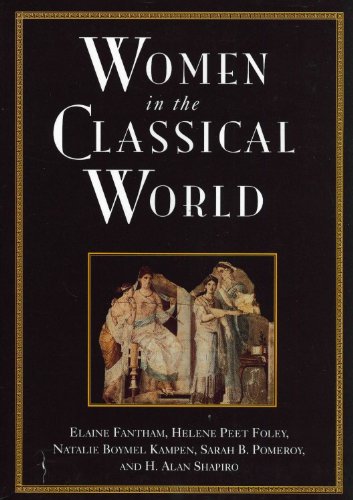

Women in the Classical World: Image and Text
Couldn't load pickup availability
About this book
Bits of information about women are scattered throughout the fragmented mosaic of ancient history. The vivid poetry of Sappho survived antiquity on remnants of damaged papyrus riddled with gaps. The inscription on a beautiful fourth century B.C.E. grave praises the virtues of Mnesarete an Athenian woman who died young but we do not know if the graves marble stele shows Mnesarete or simply a ready-made design chosen by her family. We read that on one occasion in the fourth century a great number of Roman wives were given a collective public trial and found guilty of poisoning their husbands but we can only guess whether these "poisonings" were linked to a high occurrence of accidental food poisoning or disease or something more sinister. Apart from the legends of Cleopatra Dido and Lucretia and images of graceful maidens dancing on urns the evidence about the lives of women of the classical world--visual archaeological and written----has remained uncollected and uninterpreted. Now the lavishly illustrated and meticulously researched Women in the Classical World lifts the curtain on the women of ancient Greece and Rome from slaves and prostitutes to Athenian housewives to Romes imperial family. The first book on classical women to give equal weight to written texts and artistic representations it brings together a great wealth of materials--poetry vase painting legislation medical treatises architecture religious and funerary art womens ornaments historical epics political speeches even ancient coins--to present women in the historical and cultural context of their time. Written by leading experts in the fields of ancient history and art history womens studies and Greek and Roman literature the books chronological arrangement allows the changing roles of women to unfold over a thousand year period beginning in the eighth century B.C.E. The authors seek out literature that preserves womens own voices. Both the art and the literature highlight womens creativity sexuality and coming of age marriage and childrearing religious and public roles and other themes. Fascinating chapters probe revealing aspects of the classical world: the ubiquitous reports of wild behavior on the part of Spartan and Etruscan women and the mythical Amazons; the changing views of the female body presented in male-authored gynecological treatises; the "new woman" represented by the love poetry of the late Republic and Augustan Age; and the traces of upper and lower-class life in Pompeii miraculously preserved by the eruption of Mount Vesuvius in 79 C.E. Provocative surprising filled with timeless examples of the rich legacy of classical art Women in the Classical World is a masterly foray into the past and a definitive statement on the lives of women in ancient Greece and Rome.