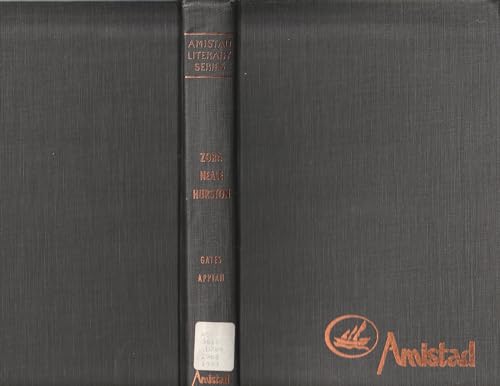
Zora Neale Hurston: Critical Perspectives Past and Present (Amistad Literary Series)
Couldn't load pickup availability
About this book
Zora Neale Hurston is a literary legend. One of the leading forces of the Harlem Renaissance Hurston was also one of the most widely acclaimed Black authors in America from the mid twenties to the mid forties. She faded into obscurity in the subsequent decades but literary figures and scholars in the 1970s revived her work and introduced a whole generation to her brilliance. Today she is the most widely taught Black woman writer in the canon of American literature. Born in the all-Black town of Eatonville Florida of which her father was mayor Hurston was intensely proud. She became the first Black student at Barnard College where she earned a bachelors degree in anthropology. She conducted significant research interviews and fieldwork relating to Black cultures of the United States and the Caribbean. In her writings instead of bemoaning the frustrations of the Black experience Hurston chose to celebrate the many cultures of her people as well as the richness of their verbal expressions. Although Hurston died poor and forgotten in 1960 the visibility of the feminist movement and the interest of women writers such as Alice Walker - who was responsible for providing a headstone for Hurstons unmarked grave in 1974 - were instrumental in reestablishing Hurstons place in African-American literature. Hurstons life and work are revealed through the reviews and essays contained in Zora Neale Hurston: Critical Perspectives Past and Present. Henry Louis Gates Jr. and K. A. Appiah have chosen reviews of her works from such important publications of her days as The Crisis New Masses New Republic the New York Herald Tribune The New York Times Book Review Opportunity and Saturday Review of Literature. Hurstons first novel Jonahs Gourd Vine (1934) earned comments ranging from "most vital" to "a disappointment " although the reviewers consistently praised her use of dialect and language. This unique collection includes reviews of Mules and Men (1935) the first collection of African-American folklore published by an African American. Their Eyes Were Watching God her 1973 novel that addressed a womans desire for independence and individuality was favorably reviewed by Alain Locke the first Black Rhodes scholar and one of Hurstons professors at Howard University and unfavorably reviewed by Richard Wright who testily complained that the book was addressed to a white audience. The autobiographical Dust Tracks On a Road (1942) was received favorably with comments on Hurstons "gutsy language." Reviews of Seraph on the Suwanne Hurstons 1948 novel featuring primarily white characters are also included as well as those of earlier works such as Tell My Horses and Moses Man of the Mountain. The essays presented here were published between 1982 and 1992 by academics authors and critics. They provide discussions and analysis at greater length of such factors as Hurstons language characters voice and her ability to reflect the reality of Black womens lives.